When accuracy, safety, and expertise matter more than language
About Cooper Machinery
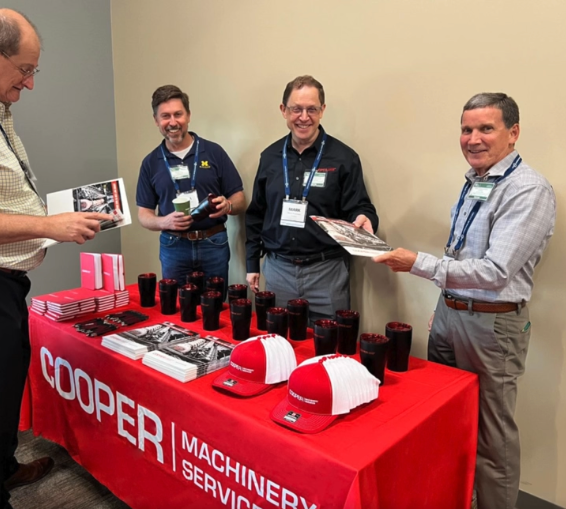
Cooper Machinery is a global aftermarket service provider for the oil & gas and refinery industries, supporting some of the largest compressors, engines, and rotating equipment in the world. Many of the machines Cooper services have lifespans of over 50 years, and failures are not just costly, but potentially dangerous.
The company provides parts, service, repair, and highly technical training to customers around the world from their headquarters in Houston, TX. Every engagement involves complex mechanical systems, precise terminology, and safety-critical instructions.
For Cooper, clear communication isn’t a “nice to have.” It’s foundational to how the business operates.
The Reality Before Langfinity: Expertise Lost in Translation
Cooper’s operations are deeply international. Engineers, operators, mechanics, and analysts work across borders every day. While many customers and employees speak some English, English is rarely their first language.
Before Langfinity, this created a persistent friction.
Training sessions ran long, often twice as long, because speakers had to pause for translation. In some regions, Cooper relied on bilingual sales staff or local agents to interpret highly technical material, even when those individuals were not engineers themselves.
In other cases, Cooper used general-purpose tools like Google Translate or built-in conferencing translations. These helped at a surface level, but consistently broke down when discussions became technical.
Average accuracy sounds good until you realize that means every tenth word is wrong. In technical training, that’s not acceptable.
- Charles, VP of Engine Analytics and Technical Training
The consequences weren’t abstract:
Technical terminology was mistranslated or simplified incorrectly
Training quality varied by region
Customers struggled to ask questions or fully engage
Cooper had to slow down sessions to compensate
Hiring was limited to candidates fluent in English, regardless of technical skill
In one example, Cooper employed a highly skilled equipment analyst in Colombia, who is exceptional at interpreting vibration and performance data from rotating machinery, but daily collaboration with U.S.-based engineers was strained.
“He’s extremely good at his job. But without clear communication, we were struggling to use his expertise fully.”
- Charles, VP of Engine Analytics and Technical Training
The problem wasn’t talent. It was language.
Why Traditional Translation Approaches Failed
Human interpreters were sometimes used, but they were expensive, difficult to schedule, and rarely specialized in oil & gas machinery. For a four-day training session, interpreter costs could easily reach tens of thousands of dollars.
More importantly, interpreters added friction. Sessions slowed down. Speakers lost momentum. Questions became filtered. And no one was ever fully confident that the technical meaning survived the translation.
For Cooper, this wasn’t sustainable at scale.
The Turning Point: Translation Built on Cooper’s Own Knowledge
What changed Cooper’s decision was not just “AI translation”—but Cooper-specific model training and fine-tuning.
Langfinity worked directly with Cooper’s internal training materials, terminology libraries, equipment names, and documentation. This included:
Compressor and engine terminology
Equipment part names
Internal roles and job titles
Customer-specific vocabulary
Proper names that generic models consistently misheard
Once those materials were incorporated, the difference was immediate.
The biggest thing that made Langfinity different was that we could give you our library of technical materials as reference material. With that material, the accuracy of translation was significantly better.
- Charles, VP of Engine Analytics and Technical Training
Cooper estimates translation accuracy at 97–98%, a threshold that fundamentally changed how the tool could be used.
That extra lift in accuracy really mattered.
It makes a huge difference to the person sitting there trying to understand what you’re saying. That’s when they start to engage and comprehend how to operate complex machinery equipment.
- Charles, VP of Engine Analytics and Technical Training
Global Training Where People Can Finally Engage
The most noticeable change came during live technical training.
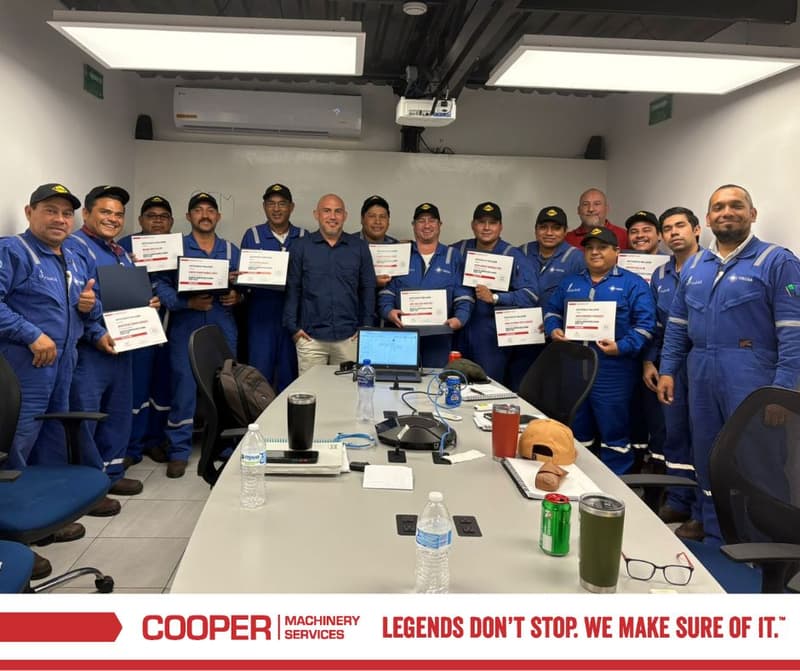
These sessions are not sales presentations. They are deep, hands-on instruction for operators, mechanics, and engineers responsible for multi-million-dollar equipment. Safety procedures, diagnostics, and maintenance practices must be understood clearly.
With Langfinity:
Participants could follow the training in real time
They no longer had to mentally translate while listening
Questions increased, especially from those who had been quiet before
Engagement improved across the room
When people don’t understand, they can’t ask good questions. With better translation, they understand and they engage.
- VP of Systems at Cooper
In past sessions, Cooper observed groups where one person would quietly translate for others at the table. That dynamic disappeared.
Instead, everyone has direct access to the content.
Cost Savings Without Cutting Corners
In one recent international training engagement, Cooper delivered a four-day technical course that previously would have required a human interpreter.
If I hadn’t had this, I would have hired a translator, for about a thousand dollars a day.
That single session saved $4,000–$5,000, without sacrificing quality.
- Charles, VP of Engine Analytics and Technical Training
But for Cooper, the bigger win wasn’t just cost. It was confidence.
Confidence that customers were receiving accurate instruction. Confidence that safety wasn’t compromised. Confidence that training quality was consistent across regions.
A Bigger Impact: Hiring for Expertise, Not English Fluency
One of the most consequential outcomes of using Langfinity wasn’t external at all. It fundamentally changed how Cooper thinks about talent.
Cooper relies on a small number of highly specialized equipment analysts—people who can interpret vibration patterns, performance data, and failure signals from heavy machinery that can operate for decades. These skills are rare. They take years to develop. And they are not evenly distributed by geography.
One of Cooper’s strongest analysts is based in Colombia. He is exceptional at his job. He understands the equipment deeply. He produces high-quality analyses that customers depend on. But English is not his first language.
Before Langfinity, collaboration with U.S.-based teams was difficult. Conversations had to be slowed down. Technical discussions were simplified. Nuance was lost. Both sides understood the limits, not because of ability, but because of language.
As a result, the team couldn’t fully operate the way it needed to.
With Langfinity in place, that changed immediately.
Teams could speak at a normal pace. Technical terms were translated correctly. Complex questions and explanations flowed both ways. The analyst could fully participate in discussions, review others’ work, and contribute his expertise without friction.
That realization reshaped Cooper’s thinking.
Historically, English fluency had been an implicit requirement for many roles, not because the work demanded it, but because collaboration did. Langfinity removed that constraint.
It allowed Cooper to prioritize what actually matters: technical competence, experience, and judgment.
Instead of filtering for language first, the company can now hire and retain the best people for the job, wherever they are, without compromising communication, accuracy, or team effectiveness.
For a business built on rare expertise and long-lived equipment, that shift isn’t incremental. It’s strategic.
A True Partnership, Not Just a Tool
For Cooper, adopting Langfinity was as much about the team behind the product as the technology itself.
The requirements were highly specific. The language was technical. Many requests fell outside a typical product roadmap. What mattered was how those gaps were handled.
From early pilots onward, Cooper’s feedback was addressed quickly. Terminology was refined. Edge cases were fixed. Accuracy improved as real training sessions and conversations were incorporated into the system.
We felt like you were listening. We never felt like we were waiting or chasing you.
- Charles, VP of Engine Analytics and Technical Training
That responsiveness built trust. Cooper didn’t have time for slow support cycles or generic answers. When issues surfaced, they were handled. When something couldn’t be done immediately, the team was clear about timelines and next steps.
Over time, Langfinity became more aligned with Cooper’s equipment, workflows, and technical language, turning the relationship into a true partnership, not just a software deployment.
Looking Ahead: Built for Global Expansion
As Cooper continues to expand its global footprint, Langfinity has become part of the company’s operating foundation, not a point solution.
It now supports how Cooper delivers technical training across regions, collaborates between global teams, and evaluates talent without language being a constraint.
The long-term impact is practical and measurable:
Consistent, high-quality technical training delivered worldwide
Clearer communication that supports safer operations
Access to highly skilled talent regardless of native language
Fewer trade-offs between speed, cost, and accuracy as the business scales
For Cooper Machinery, language is no longer a limiting factor in growth. It no longer determines who can be trained effectively, who can contribute meaningfully, or who can be hired.