Replacing silence, separation, and workarounds with inclusion, dignity, and shared worship
The Challenge: When Language Becomes a Barrier to Belonging
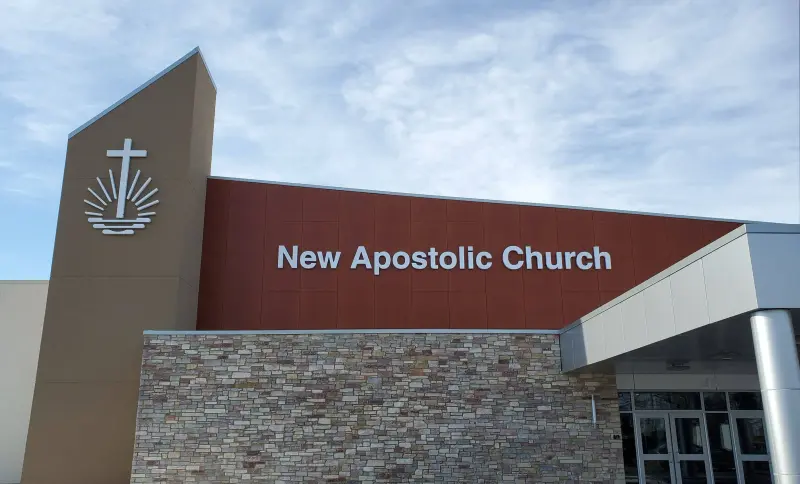
New Apostolic Church USA (NAC USA) serves 170+ congregations across the United States, many of which have experienced a rapid growth of immigrant and refugee members over the past several years.
In cities like Rochester, New York, congregations that once consisted primarily of English-speaking members suddenly doubled in size, with 30 - 40 new members who spoke Swahili and little to no English. Many had come from refugee camps across Africa. Some were elderly. Many could not read their own language.
For church leaders, the challenge was immediate and painful:
Sermons were delivered in English, but large portions of the congregation could not understand a word
Coordination outside of services (rides, worship participation, announcements) was nearly impossible
Google Translate failed, many members couldn’t read Swahili, and text-only tools broke down entirely
Some families stopped attending altogether because services were inaccessible
I’m preaching, and I’m looking out at people who have no idea what I’m saying. That’s heartbreaking.
- NAC USA Leader
Language barriers weren’t just inconvenient — they were creating separation inside a community built on unity.
Why Traditional Solutions Didn’t Work
Historically, NAC congregations addressed language needs by:
Hosting separate services in different languages
Assigning bilingual volunteers
Bringing in live interpreters for major events
But none of these approaches scaled, especially for weekly services and small to mid-sized congregations:
Human interpreters were expensive, hard to schedule, and limited to a few languages
Bilingual volunteers were scarce and quickly burned out
Running parallel services fractured the congregation into “us” and “them”
Most importantly, voice mattered. Many members could not read translations — they needed spoken language, in real time.
The Turning Point: Discovering Langfinity Through NAC Canada
The breakthrough came after NAC USA leaders attended SHINE, NAC Canada’s international youth summit, where Langfinity powered real-time multilingual interpretation.
What stood out wasn’t novelty, it was inclusion & understanding in different languages.
We saw this working live, at scale, with real people. And we thought: we need this.
- NAC USA Leader
Within weeks, NAC USA began piloting Langfinity in congregations like Rochester, Chicago, and Erie.
The Solution: Real-Time Voice Translation Built for Real Services
Langfinity enabled NAC USA to translate spoken sermons into Swahili in real time, delivered through:
Headsets distributed inside the church
Phones and tablets accessed via QR codes
A simple browser-based interface, no app installs
The setup was intentionally lightweight:
Church audio feeds directly into Langfinity
One tablet or laptop runs the translation room
Members listen in their own language, live
Within days, congregations were up and running.
“I got access on a Friday. By Sunday, it was live.”
What Changed: From Silence to Understanding
The impact was immediate.
For many Swahili-speaking members, this was the first time they understood an entire service as it was happening. Not summaries. Not side explanations. The full sermon, spoken in real time.
One church leader described the reaction simply:
“They’re in heaven. It’s better than nothing — it’s something.”
Members who had stopped attending because they couldn’t follow the service began coming back. Elderly members, some of whom will never realistically learn English, were finally able to understand what was being preached.
As one leader explained:
"Grandma will never learn English. Without this, she would never hear the Word of God."
For these members, real-time voice translation wasn’t a convenience. It was the difference between attending and staying home.
Keeping the Congregation Together
Before Langfinity, churches faced a difficult choice. They could try to run separate services by language, or rely on volunteers to interpret informally. Both approaches created division over time.
Langfinity made it possible for everyone to stay in the same service.
Members worshiped together, listened to the same sermon, and shared the same experience — just in different languages.
Language barriers create ‘us and them.’ This removes that.
- NAC USA Leader
Instead of fragmenting the congregation, translation became something that quietly supported unity.
Beyond the Sermon: Communication Outside Sunday Services
The benefits didn’t stop at the sermon itself.
Once members could understand what was being said during services, it became easier to involve them outside of Sunday worship. Leaders could coordinate rides, share announcements, invite participation in worship, and plan small gatherings more effectively.
Conversations after services also became easier. Members who previously sat quietly began engaging more.
For the first time, leaders felt that real two-way communication between English and Swahili speakers was possible.
A Practical Benefit for Church Leaders
Church leaders also found value in the transcripts generated after services.
By reviewing them, ministers could see where messages were unclear or where phrasing didn’t translate well. Some adjusted their pacing or simplified language as a result.
It’s making me a better speaker.
- NAC USA Minister
The tool didn’t change how leaders preached — it helped them communicate more clearly to a multilingual congregation.
Real-World Results
In one congregation alone, 30–40 Swahili-speaking members now receive live voice translation during weekly services.
Churches were able to get set up in days, not months. As adoption grows, 50 more congregations across the U.S. are beginning to use Langfinity regularly.
One leader summarized the relationship this way:
We’re not just using a product. This is a partnership.
- NAC USA Leader
Why Langfinity Worked
Langfinity succeeded where other tools failed because it was designed for live, in-person worship.
It focuses on voice, not text. It works for members who cannot read. It doesn’t require apps, booths, or separate services. It adapts to church terminology and real preaching styles.
Most importantly, it fits naturally into how services already run.
Looking Ahead
NAC USA now sees Langfinity as a long-term solution for multilingual worship.
Leaders are exploring its use for larger gatherings, leadership meetings, and additional languages across regions — expanding access while reducing reliance on human interpreters.
This isn’t about technology. It’s about making sure everyone belongs.
- NAC Leader